
WHAT DID THE BURNING BUSH ACTUALLY LOOK LIKE? 3 BIBLICAL CLUES
![[HERO] What Did the Burning Bush Actually Look Like? 3 Biblical Clues](https://cdn.marblism.com/_8lJwkSxRpg.webp)
Imagine standing in the quiet, rugged expanse of the Sinai Peninsula. The air is dry, the sun is high, and you are tending a flock of sheep in the shadow of Mount Horeb. Suddenly, something catches your eye: not a predator, but a flicker of light where there should only be shadows.
This was the moment that changed Moses' life forever. We often see the burning bush depicted in Sunday school illustrations as a neat little campfire inside a shrub, but the biblical account suggests something far more immersive and visually stunning.
At 7th Trumpet Entertainment, we believe that visualizing these miracles helps us connect deeper with the Word. When we look at the specific details in Exodus 3, we find clues that paint a vivid picture of this divine encounter.
Let’s dive into the three biblical clues that help us understand what Moses actually saw on that holy ground.
1. A Humble, Ordinary Shrub (The Seneh)
The first clue lies in the type of plant God chose for this manifestation. The Hebrew word used in Exodus 3:2 is seneh.
Scholars generally agree that this refers to a type of bramble or thornbush common to the region. It wasn't a towering cedar of Lebanon or a majestic oak. It was a lowly, undistinguished plant.
- The Choice of the Ordinary: By choosing a thornbush, God demonstrated that His presence can inhabit even the most humble or "prickly" parts of creation.
- A Natural Contrast: The sight of a common desert shrub suddenly becoming the center of a cosmic event would have been jarring.
- Visual Texture: Instead of smooth leaves, imagine a tangled web of sharp thorns and small, hardy foliage suddenly illuminated from within.
The spiritual meaning of the burning bush often starts here. It reminds us that God doesn't need a grand stage to do something miraculous. He meets us in the ordinary, everyday "wilderness" of our lives.
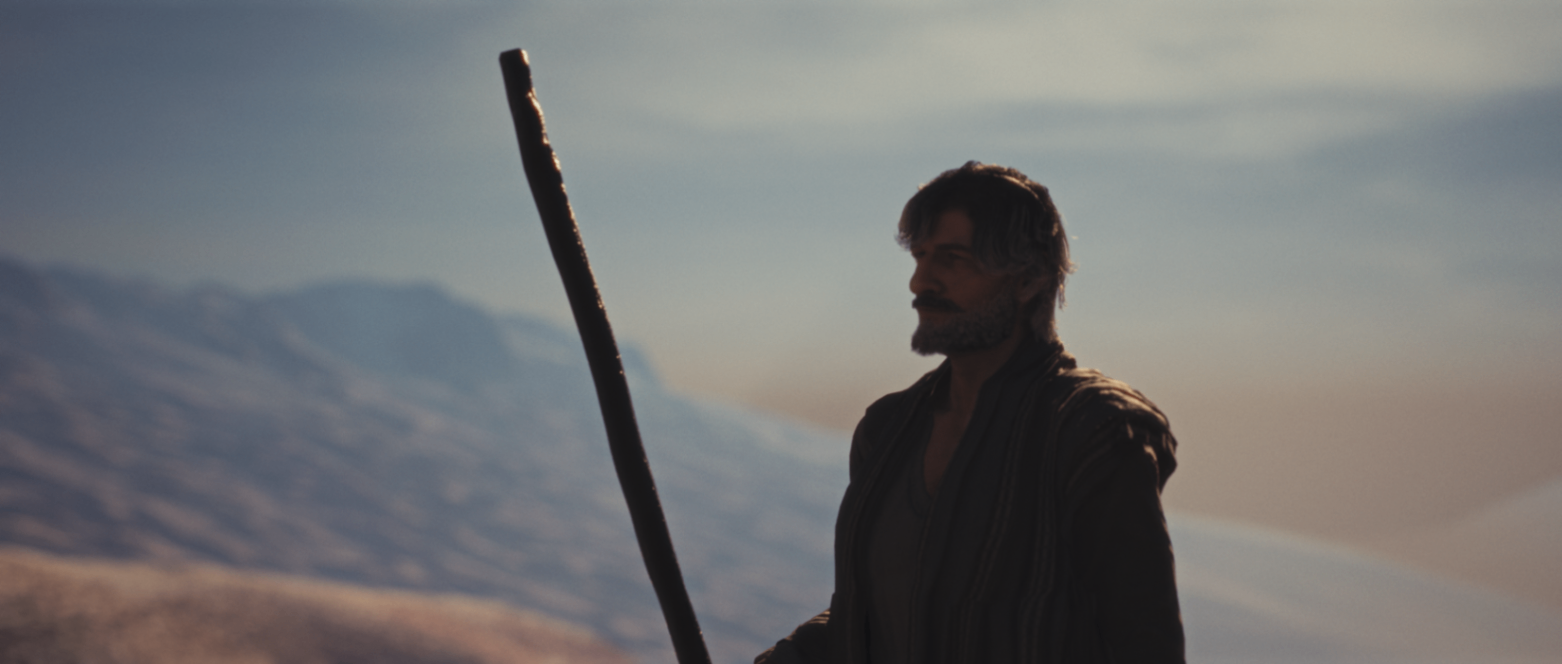
For those looking to bring these moments into their own homes, we often recreate these visuals in our modern Christian wall art. Seeing the grit and reality of the desert helps make the miracle feel personal.
2. Fire Visible From Within, Not Consuming the Plant
The most striking visual element Moses noticed wasn't just the fire, but the behavior of the fire. Exodus 3:2 says, "the bush was burning with fire, yet the bush was not consumed."
In a normal fire, the wood or leaves act as fuel. They turn to ash as the energy is released. But this fire was different.
- Independent Energy: The fire appeared to be self-generated. It was in the bush, but not of the bush.
- Structural Integrity: Imagine seeing bright, flickering orange and white flames dancing between branches, yet the leaves remain vibrant and green.
- A Continuous Glow: Because it wasn't burning fuel, the light wouldn't have flickered out or dimmed. It was a constant, steady brilliance.
This visual paradox is what forced Moses to "turn aside." He wasn't just looking at a fire; he was looking at a scientific impossibility. It was a visible manifestation of God’s eternal nature: He needs no external fuel to exist.
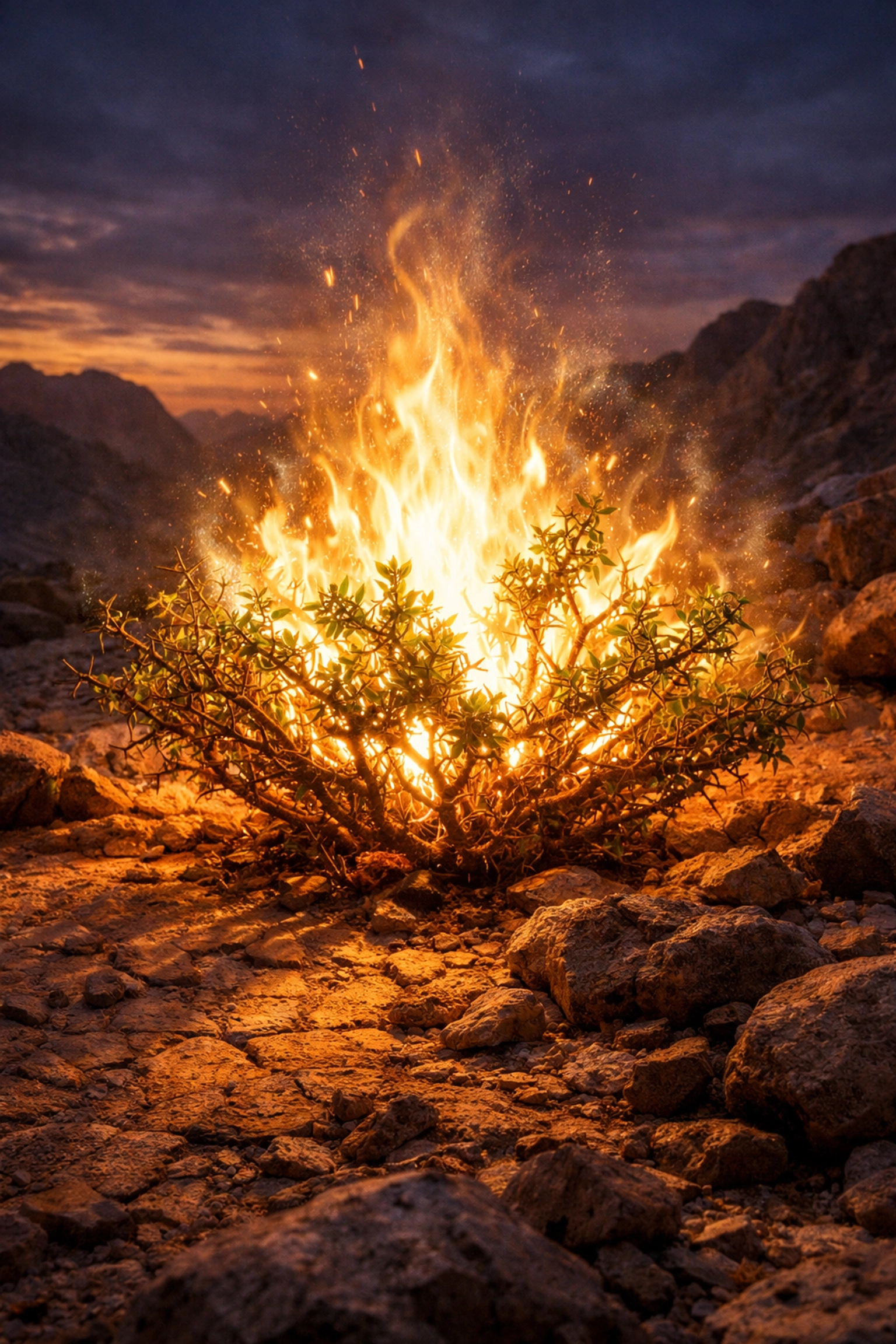
When we create our realistic recreations of biblical scenes, we focus on this "impossible" lighting. It’s about capturing that moment where nature and the supernatural collide. You can read more about this specific event in our detailed breakdown of Moses and the burning bush.
3. The Presence of the "Angel of the Lord"
The third clue is perhaps the most mysterious. Exodus 3:2 tells us that "the Angel of the Lord appeared to him in a flame of fire out of the midst of a bush."
This suggests that the fire wasn't just a physical phenomenon, but a localized presence.
- A Focused Center: Within the blazing light, there was a specific point of origin: a messenger or a manifestation of God Himself.
- The Voice from the Flames: The visual wasn't silent. The bush became the source of a direct, audible call.
- Divine Interaction: This wasn't just something to look at; it was a "great sight" that demanded a response.
Who exactly was this figure? Many theologians believe this was a pre-incarnate appearance of Christ. To understand the depth of this mystery, you might want to explore our article on who is the angel of the lord.
The Immersive Experience of Holy Ground
When Moses approached the bush, God told him to take off his sandals because the ground was holy. This adds another layer to our visual understanding: the miracle affected the environment around it.
Imagine the heat: not a scorching, destructive heat, but perhaps a warmth that radiated through the soles of his feet. Imagine the color of the sand and rocks under the intense, supernatural glow of the flames.
At 7th Trumpet Entertainment, our goal is to move beyond flat illustrations. We want to provide an immersive experience that makes you feel like you are standing right there with Moses.
Whether it’s through our realistic visual guides or our cinematic storytelling, we aim to capture the "awe" that Moses must have felt.
Why Visualizing the Burning Bush Matters
You might wonder why we spend so much time pondering what a bush looked like thousands of years ago.
- It makes the Bible tangible. When we can picture the thorns and the unconsumed leaves, the story moves from a myth to a historical reality.
- It fuels our worship. Seeing the power of God over the natural elements reminds us of His sovereignty today.
- It invites curiosity. Asking "how did this look?" leads us to ask "what does this mean?"
For a deeper look at the theological implications, check out our post on the spiritual meaning of the burning bush.

Bringing the Miracles Home
The story of the burning bush is a reminder that God is constantly reaching out to us, often through things that stop us in our tracks and make us wonder.
We try to capture that sense of wonder in everything we produce. From our high-end digital recreations to our physical products, we want to help you create "holy ground" in your own space.
- Visual Devotionals: Using art to focus your mind during prayer.
- Conversational Pieces: Artwork that prompts friends and family to ask about the story behind the image.
- Daily Reminders: Even a simple scripture phone case can be a "burning bush" moment: a small, ordinary object that reminds you of God’s presence.
Conclusion: A Sight to Behold
The burning bush was never meant to be a hidden miracle. It was a "great sight" intended to grab Moses' attention so that God could give him a mission.
By looking at the biblical clues: the humble thornbush, the unconsuming fire, and the presence of the Angel of the Lord: we get a glimpse into a moment where the veil between heaven and earth was pulled back.
If you’re interested in more visual journeys through the Bible, we invite you to explore our other stories. From the vibrant landscapes of Eden to the miracles of the Exodus, we are dedicated to bringing the Word of God to life in a way that is as beautiful as it is biblical.

What do you imagine when you read Exodus 3? Does the fire look like a soft glow or a brilliant sun? Whatever your mental picture, remember that the same God who spoke from the thorns is still speaking today.
Keep exploring, keep wondering, and keep looking for the miracles in your own wilderness.
