
WHO IS THE ANGEL OF THE LORD? THE EXODUS 3 MYSTERY AT THE BURNING BUSH EXPLAINED
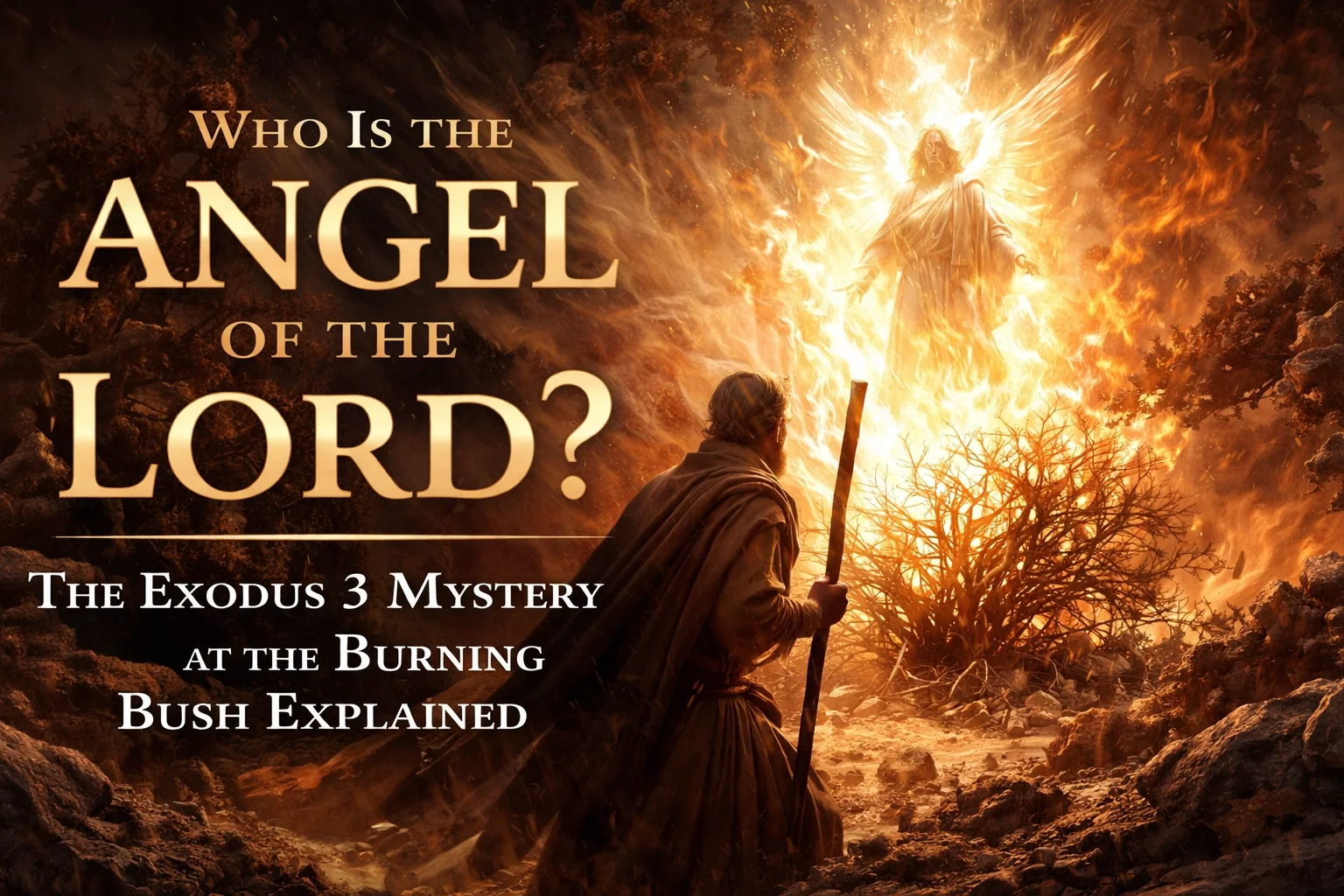
Moses looking at the Angel of the Lord in the midst of the burning bush
The Burning Bush Enigma
The account of the burning bush presents a deep theological mystery. The ancient Hebrew text identifies this speaker as the Angel of the Lord, yet the figure speaks with the voice of the Creator, claiming the sacred covenant name. This voice forces readers to decide if they are hearing a standard heavenly messenger, the Creator, or a different entity altogether.
Resolving this ancient puzzle requires examining the Hebrew scriptures closely.
Understanding this meeting requires looking at Moses and his situation. He had fled his life as an Egyptian prince after killing an overseer, spending forty years in obscurity tending sheep.
His quiet life shattered while he watched his father-in-law's flock near Mount Horeb. The text in Exodus explains that a divine messenger appeared inside a flame of fire from the middle of a bush.
Moses watched something defying nature, a wild fire leaving the branches unburned. Intrigued by the sight, he stepped closer to investigate.
A sudden voice commanded him to remove his sandals because the ground itself was holy. This demand points to an intense reality.
This was far from a typical angelic visit. The physical dirt absorbed holiness from the presence dwelling within the fire.
The Paradox of the Divine Messenger
Ordinary messengers speak in the third person, using phrases like, "Thus says the Lord," to direct focus toward God. Throughout scripture, ordinary messengers refuse worship and deliver messages strictly on behalf of another.
This figure behaves differently. Instead, this distinct messenger speaks in the first person as the Almighty Himself.
He makes several startling claims during the conversation.
"I am the God of your father, the God of Abraham, the God of Isaac and the God of Jacob" (Exodus 3:6)
"I have indeed seen the misery of my people" (Exodus 3:7)
"I AM WHO I AM" (Exodus 3:14)
The speaker discards expected formulas like, "God has seen," and instead says, "I have seen." He claims the sacred name of God as His own identity.
This produces a sharp theological tension. A sent messenger speaks with the exact identity of the sender. A strange paradox takes root here.
We meet a messenger sent by God who speaks with the full authority of God Himself.
Three Interpretations of the Angel of the Lord in Exodus
1. A Pre-Incarnate Appearance of Christ (Christophany)
Many Christian scholars throughout history hold this view. The messenger displays characteristics belonging solely to God, such as knowing the deep suffering of Israel and promising rescue.
This figure also accepts worship, a gesture reserved for the Creator alone. Many theologians believe this was Jesus Christ appearing in the Hebrew scriptures before His birth in Bethlehem.
From this viewpoint, He served as the mediator between God and humans long before the New Testament began.
To build a strong theological case, we can look at other key appearances of this divine messenger throughout the Old Testament. For instance, in Genesis, He finds Hagar in the wilderness and speaks with divine authority. She subsequently names Him "You-Are-the-God-Who-Sees.
"
Later, He calls out to Abraham on Mount Moriah, preventing the sacrifice of Isaac. He swears an oath by Himself, a prerogative reserved solely for God. These accounts paint a consistent picture.
In Judges, Gideon encounters this same figure and receives divine commissions. He builds an altar to Yahweh after realizing he had seen Him face to face. These consistent cross-references point to a single, continuous divine Person acting as the visible expression of the invisible God.
2. A Direct Revelation of God's Presence (Theophany)
Another view suggests this was a direct physical appearance of God Himself. Scripture states that no human can look at God in His full glory and survive.
This physical form allowed a mortal man to meet the Creator safely.
3. A Unique, Representative Angelic Being
A smaller number of writers suggest this was a highly elevated created angel who represented God. However, this explanation fails to explain why a created being would accept worship and speak as the great I AM.
Such actions would be blasphemous for any normal angel.
How this Divine Messenger Differs From Standard Angels
The Bible shows a clear distinction between standard angels and this distinct messenger. The table below details these major differences.
| FEATURE | STANDARD ANGELS | THE ANGEL OF THE LORD |
|---|---|---|
| Manner of Speech | They speak in the third person by saying, "Thus says the Lord" | Speaks in the first person, declaring, I AM |
| Worship and Honor | They refuse worship from humans | Accepts worship and commands reverence |
| Divine Identity | They do not use the name of God as their own | Carries the divine name and speaks as Yahweh |
This figure is much more than a messenger sent to do a job. We are looking at someone who connects directly with God Himself.
Spiritual Lessons From the Burning Bush Today
Several lessons come from this ancient encounter at the burning bush.
First, it shows that God meets people in ordinary, everyday places. Moses was doing his daily chores in the desert when heaven broke into his world.
Second, these moments demand a real response from us. When Moses realized who was speaking, he covered his face and took off his shoes.
Holy ground requires humility and respect from human beings.
This ancient story shows that God refuses to stay distant from His creation. He enters our world, meets us where we are, and calls ordinary people to do great things.
Each of us will face moments when we must decide to pay attention to the voice of God.
Want to See What it Might Have Looked Like?
We brought this story to life on our channel. Hit play below to watch the cinematic retelling of the burning bush story, explore the historical setting, and see this timeless biblical story unfold in stunning 4k cinematic style, including the Angel of the Lord appearing in the midst of the burning bush.
