
BEYOND THE NILE: VISUALIZING THE MIRACLES OF MOSES FOR A NEW GENERATION
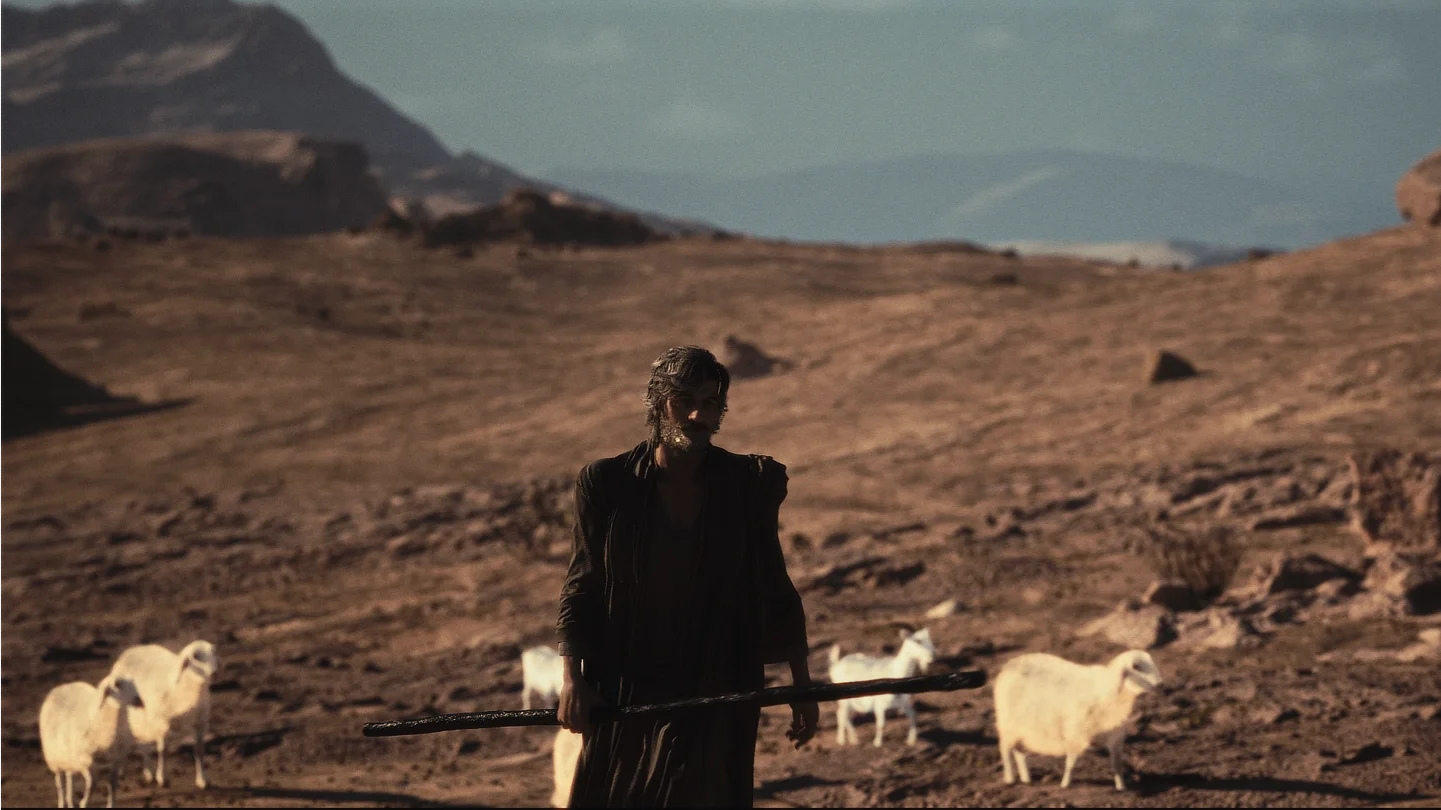
Moses leading his flock in the wilderness
Few narratives match the sheer cultural weight of the story of Moses in the Bible. It remains a central chronicle of escape, lawgiving, and divine intervention. To reach audiences today, creators must move beyond flat illustrations, crafting rich, sensory encounters that make this biblical epic breathe.
Archival records and physical discoveries offer a solid backdrop for the Exodus. The Merneptah Stele, dating to near 1208 BCE, stands as the earliest non-biblical mention of Israel in Canaan. Artists lean on these tangible links to build highly accurate digital models of royal Egyptian courts and the harsh Sinai wilderness.
Adapting the scriptures into visual media presents unique hurdles distinct from written translation. While scholars parse ancient Hebrew idioms, digital artists must determine the precise weave of Egyptian linen and the texture of ancient mudbrick. Bridging this gap demands close teamwork among linguists, historians, and animators.
This study looks at the tools and educational plans used to translate ancient texts into active media. We explore the meeting point of storytelling, historical accuracy, and digital links. The goal is simple, namely to link antiquity with modern technology.
Recreating the Story of Moses in the Bible Digitally
Bringing the miracles of the Exodus to the screen requires a careful balance of historical respect and visual drama. The ten plagues of Egypt present a complex puzzle for animators seeking to depict both ecological ruin and divine wrath. Designers study ancient Nile silt patterns and locust migration cycles to draw these events with convincing detail.
Showing the Nile turning to blood requires careful planning to avoid a garish, cartoonish look. Visual effects artists study real-world events, such as toxic algae blooms and red clay runoff, to craft realistic fluid simulations. This grounding in physics makes the disaster feel raw and believable to modern viewers.
The parting of the Red Sea remains the most technically demanding sequence in the entire narrative. Research from the National Center for Atmospheric Research suggests that specific wind conditions could indeed push water back to create a temporary land bridge. Animators use these fluid dynamics to sculpt towering walls of water that match both scientific models and sacred text.
Mount Sinai demands immense atmospheric depth and dramatic lighting. Biblical accounts describe the peak shrouded in smoke, lightning, and dense cloud cover, accompanied by the blast of a ram's horn. Visual artists use particle systems and volumetric light within modern game engines to copy this terrifying, majestic encounter.
The twin pillars of cloud and fire stand as a constant, comforting presence during the desert wanderings. Visual effects artists generate these phenomena using volumetric fluid simulations to capture a churning, semi-translucent column of dust and heat. This method avoids a static, painted look, capturing the dynamic, living force described in the ancient accounts.
These methods help audiences appreciate the sheer scale of the migration. Traditional illustrations often shrink the size of the Hebrew camp, whereas digital tools can populate a vast desert with hundreds of thousands of individual figures. This sense of scale helps modern viewers grasp the immense logistical hurdles of the journey.
Key Symbols in the Exodus Narrative
Every phase of Moses's journey carries deep symbolism that must be preserved when adapting the narrative for digital screens. Visual cues allow creators to convey deep theological themes without relying on heavy voiceover narration. Interactive screens can highlight these objects, letting users tap and explore their historical context.
| SYMBOL | SPIRITUAL MEANING | VISUAL DRAWING STYLE |
|---|---|---|
| The Burning Bush | Sacred calling and holy ground | Advanced flame shaders that mimic a fire that does not burn the branch, showing holiness |
| The Bronze Serpent | Physical healing, faith, and rescue | A weathered bronze snake raised on a staff amidst a rugged desert camp |
| The Tabernacle | The portable sanctuary and divine dwelling | Highly detailed 3D models built to match exact biblical descriptions |
| The Staff of Aaron | Authority, priesthood, and divine choice | Time-lapse animation depicting the sudden sprouting of fresh almond blossoms |
These symbols act as visual anchors, linking specific moments to the broader themes of covenant and rescue. Designers must ensure these elements remain central to the scene rather than dissolving into the background. Careful camera angles and deliberate color choices guide the viewer's eye directly to these symbolic details.
Constructing the Ark of the Covenant digitally requires strict adherence to text descriptions. Artists must capture the gleam of pure gold leaf over the natural grain of acacia wood, emphasizing the contrast between heavenly purity and earthly materials. This close attention to texture mirrors the precise craftsmanship demanded by the ancient instructions.
The priestly vestments described in Exodus offer another rich canvas for symbolic art. Animators can program different light settings for each of the twelve gemstones on the breastplate, which stand for the tribes of Israel. Such detail allows viewers to see the complex, multi-layered symbolism of the high priest's role.
Modern Tools for Sharing the Biblical Epic
Recent shifts in technology have altered how we interact with historical stories. Virtual reality spaces permit users to walk through rebuilt chambers of Pharaoh's palace. This spatial immersion builds an emotional bond to the ancient past that text alone rarely creates.
Mobile applications can project the wilderness tabernacle directly into classrooms or homes. Students can look at a life-sized virtual model of the Ark of the Covenant, studying its gold details up close. This hands-on exploration helps learners understand the physical size and craftsmanship detailed in the scriptures.
Unreal Engine 5: Real-time rendering software used to build vast desert landscapes and weather effects like the cloud and fire pillars.
3D Scanning: Photogrammetry of actual Sinai terrain and ancient Egyptian artifacts to secure historical accuracy.
3D Audio: Spatial sound that copies the echoes of desert canyons and the low rumble of the mountain to deepen immersion.
Motion Capture: Technology to record physical movement, capturing the tension in confrontations between Moses, Aaron, and Pharaoh.
These tools allow people to take self-guided tours through historical sites. Users can choose their path through the parted waters or stand among the vast crowd at the base of Sinai. This freedom increases interest and memory, particularly for younger, media-literate audiences.
Multiuser online platforms allow entire classrooms to explore rebuilt biblical sites together. A teacher can lead a virtual field trip through the desert, pointing out key geographical features in real time. This shared experience encourages cooperative learning and spontaneous discussion about the historical setting.
Mobile apps deliver sharp visuals without requiring expensive hardware. Using built-in gyroscope sensors, students can peer around a digital Egyptian court simply by rotating their devices. This ease of access opens up excellent study tools for learners everywhere.
Instructional Plans for Scripture Education
Bringing digital media into educational spaces requires a thoughtful teaching plan. Instructors use these visual aids not as mere entertainment, but as springboards for historical questions and deeper reflection. Combining modern tech with guided discussion encourages students to examine the sacred text with academic care.
Interactive features work well for teaching complex biblical timelines and geography. Students can navigate virtual maps of the Sinai Peninsula, completing tasks linked directly to scriptural passages. This active participation reinforces spatial awareness and timeline sequencing far more effectively than passive listening.
Role-Play: Situations where students take on historical roles, such as tribal elders or artisans, to explore the social makeup of the migration.
Text Comparisons: Displays that pair visual work with ancient texts to spot artistic changes.
Interactive Timelines: Tools linking the events of the Exodus with wider Near Eastern history.
Shared Sandboxes: Online spaces where students cooperate to build models of ancient structures.
This teaching style builds analytical thinking by urging students to weigh different readings of the narrative. By examining why an artist chose a specific visual style for the parted sea, students learn to scrutinize source materials more closely. This approach turns passive reading into active investigation.
Teachers employ these digital models to address historical puzzles. Students compare archaeological finds from sites like Hazor and Jericho with the models shown on screen. This comparative study helps learners distinguish between theological narrative, artistic choices, and archaeological data.
Self-paced study modules allow students to follow the Exodus route at their own speed. Each stop along the digital path offers interactive maps, primary source documents, and short scholarly videos. This student-focused design suits diverse learning styles and encourages independent research.
Cultural Legacy of the Prophet's Journey
The reach of this narrative extends far beyond religious walls. Throughout history, the Exodus has served as a blueprint for freedom movements across the globe. Presenting this story helps modern audiences recognize its deep footprint on civil rights and social justice movements.
Leaders of the American civil rights movement frequently compared their struggle to the Hebrew escape from bondage. Harriet Tubman was famously dubbed Moses for her dangerous missions leading enslaved people to freedom. Modern media, including graphic novels and animated films, highlights these historical ties for younger generations.
The legal framework set up at Mount Sinai also helped shape the basis of Western law. The concept of a written code that bound leaders and citizens alike was radical in the ancient Near East. Displaying the Ten Commandments on interactive museum screens highlights this pivotal shift in human governance.
The look of this ancient saga has deeply shaped Western art, from Michelangelo's sculpture of Moses to the vivid paintings of Marc Chagall. Modern digital creators pay homage to these classical works by borrowing their color schemes and layout structures. This continuity ties modern digital design to centuries of artistic heritage.
Themes of liberation and struggle against tyranny continue to echo in modern films and books. Stories of unlikely leaders rising to guide their people out of oppression frequently mirror the structure of the Exodus. Spotting these archetypes helps students see how ancient narratives continue to shape modern popular culture and storytelling.
Cinematic landmarks, including Cecil B. DeMille's 1956 epic The Ten Commandments and the 1998 animated film The Prince of Egypt, defined the visual imagination of generations. Modern creators build upon this legacy, updating the look to satisfy audiences accustomed to high-fidelity video games.
This ongoing shift keeps the narrative accessible and appealing in a fast-paced, screen-dominated world.
Summary of the Visual Journey
Presenting this ancient chronicle to new audiences requires a thoughtful blend of historical research, modern technology, and storytelling depth. By moving beyond static media, educators and artists can foster a deeper understanding of this major historical and theological text.
The most successful modern versions focus on key parts of the narrative.
Historical Grounding: Using geographical data and environmental physics to anchor dramatic events in reality.
Interactive Media: Using virtual reality and mobile apps to offer self-guided exploration of ancient spaces.
Teaching Fit: Pairing visual assets with analytical tasks that urge close reading of source texts.
Symbolic Preservation: Using modern rendering techniques to highlight the deep theological symbols embedded within the text.
This multi-layered approach turns the ancient narrative from a flat historical record into an active, appealing educational path. Relying on modern digital methods keeps this timeless scripture vital, continuing to inspire, teach, and challenge minds for generations to come.
Would You Rather Watch Videos Instead?
We brought many of the stories of Moses to life on our channel. Hit play below to watch the cinematic retelling of the Exodus stories, explore the historical setting, and see the biblical narrative unfold in stunning detail.
