
STRUCTURING THE NARRATIVE ARC OF BIBLICAL EPICS
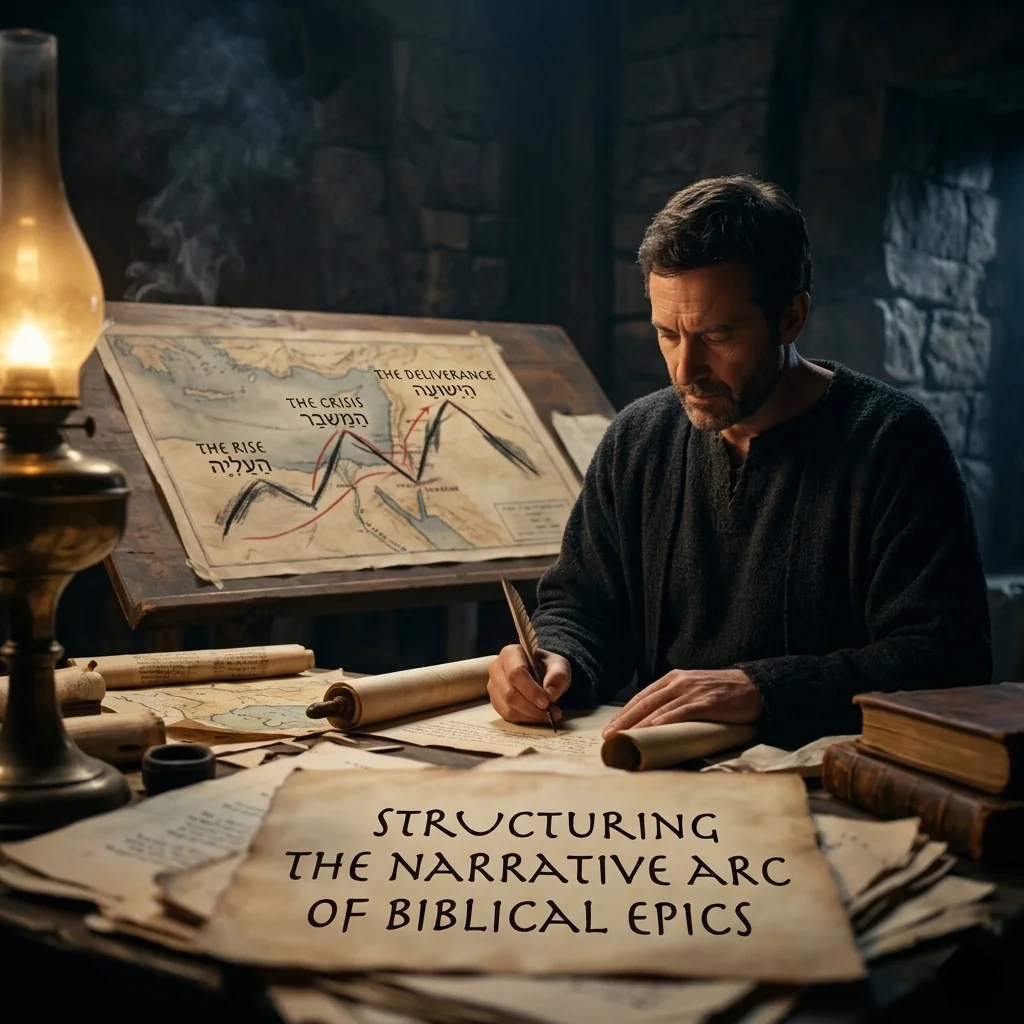
Creating a script for a biblical epic
Writing the Sacred Epic: How We Bring Ancient Texts to the Screen
To write a biblical epic is to reconstruct ancient prophecy and history under immense pressure. In the early days at 7th Trumpet Entertainment, when I first sat down to translate the Hebrew scriptures and the gospels into high-fidelity 3D cinematics, I hit a wall. Traditional Hollywood formulas simply broke down when faced with the sheer scale of these holy encounters. When billions of people hold the source material as sacred truth, the pressure is immense. Every line of spoken dialogue, every pocket of shadow, and every beat of the narrative must carry both historical weight and theological truth. By constructing digital worlds, I found a way to honor the ancient text while generating the tension needed for modern cinema.
The path forced me to merge scripture structures with the capabilities of Unreal Engine 5. I learned that the best way to reach an audience today is to treat these events not as cold history, but as raw, physical experiences happening in real time. I focus on the raw emotions of historical figures and use real-time 3D animation pipelines to connect the ancient parchment directly to cinematic realism. This guide maps out the narrative methods I use to bring these timeless accounts to life, offering a path for screenwriters and digital artists who want to craft biblical scripts with spiritual weight.
The Foundation of Biblical Epic Screenwriting: Structuring the Divine Call
Classical drama relies on an inciting incident to disrupt a protagonist's life, dragging them into the unknown. In a biblical epic, this disruption is far grander: a direct confrontation with the living God, where the infinite collides with the finite. Take the account of Moses and the burning bush at Mount Horeb in Exodus 3. To write this moment well, you cannot rely on ordinary exposition. The scene must hang on the heavy psychological and spiritual reality of a mortal standing before the Creator of all things.
When I developed our cinematic animation of this encounter, I shaped the narrative arc to emphasize Moses' complete isolation and his slow, terrifying realization. He is no bold hero waiting to lead a nation. He is a fugitive shepherd who has spent forty years hiding in the dust. The script begins with quiet, ordinary actions, framing him against the vast, silent waste of the desert. I built this environment in Unreal Engine 5 with wide landscapes and gritty sand textures to make the wilderness look endless, leaving Moses looking tiny and fragile in the frame. The spark of the story begins with no loud noise, but with a silent, impossible sight: a bush burning with fire, yet never turning to ash. This visual paradox holds the entire scene together.
To translate this to the page, I write action lines that focus heavily on the physical sensation of light, heat, and shadow. The fire represents the holiness of God, a light that burns without destroying. In the script, I describe how the golden glow of the supernatural flame slices through the deep, cool shadows of the mountain. This contrast of light and shadow is not just for show. It is a structural tool that mirrors Moses' inner shift from cold fear to sacred awe. I pace the dialogue slowly, letting the silence between the spoken words carry the heavy weight of God's presence. The resulting screenplay moves past simple storytelling, drawing the audience into the same sacred space that Moses stood upon.
The Midpoint: Building Tension in High-Stakes Politics
The middle of a standard screenplay often sags, losing momentum. Writing biblical scripts offers a natural cure through the fierce political and spiritual clashes built right into the source material. The midpoint must raise the stakes, turning a personal calling into a national, cosmic struggle. I used this approach when building our narrative arc for the Journey of the Wise Men, turning a familiar seasonal tale into a tense political thriller. The trek of the Magi is not a peaceful, passive march. It is a perilous expedition by elite Persian scholars navigating the treacherous politics of the ancient Near East.
The script structures this trek by contrasting two vastly different worlds. On one side are the wide, clean, silent desert wastes under the bright light of the Star of Bethlehem. On the other lie the dark, heavy stone courts of King Herod in Jerusalem. This clash of environments drives the entire second act. The crisis hits when the Wise Men arrive in Jerusalem, accidentally alerting a paranoid, ruthless ruler to the birth of a rival king. The script focuses on the tense, quiet dialogue inside Herod's palace, where every word carries the threat of death.
To build this tension, I built Herod's court in our 3D pipeline with giant, heavy stone walls that cast sharp shadows to swallow the light. This look supports the scripture structure, showing the spiritual darkness of Herod's reign against the bright light of the star. When writing the script, I avoid modern clichés and preachy lines. Instead, I use sharp, historically grounded exchanges that show the political instability of the era. The Magi become brave intellectuals who must use their wits and divine warnings to outsmart a tyrant, keeping the story moving at a relentless pace.
Using Visual Atmosphere to Tell the Story
A successful script for a biblical epic must weave the visual atmosphere directly into the plot structure. In our creative work, I do not treat the setting as a flat backdrop. Instead, the environment acts as a silent character reflecting the spiritual state of the protagonists. This guided how I structured the narrative of the Garden of Eden in Genesis 2 and 3. The big challenge in adapting this perfect, untamed sanctuary is making a world without sin feel dramatic and interesting before the trouble starts.
I did this by structuring the screenplay around harmony and its sudden, tragic fracture. In the opening scenes, the environment is filled with abundance, soft lighting, and a perfect connection between humans and nature. I built this scene in Unreal Engine 5 with thick, moving foliage and spilling ancient rivers, creating a sense of endless life and peace. The story arc of the scene is driven by the physical discovery of this divine sanctuary, setting a high standard of perfection that makes the fall devastating. When temptation and disobedience enter, the script does not call for cheap earthquakes or cartoonish dark clouds. Instead, we write small, chilling changes into the air, a storm with lightning. Shadows stretch longer, the bright colors of the garden fade slightly, and a cold sense of isolation creeps into the frame.
This attention to visual storytelling is also the foundation of our physical art collection. Every framed canvas in our shop is a direct, high-fidelity capture of these designed cinematic environments. By bringing these rendered scenes into the physical world as high-grade, ready-to-hang art, we let viewers bring the atmospheric depth and timeless truths of these biblical stories into their own homes. The art stands as a daily, visual extension of the narrative we craft on screen, bridging the gap between digital storytelling and home design.
Resolving the Sacred Arc: The Climax
The climax of a biblical epic must deliver an ending that is both physically spectacular and spiritually deep, satisfying the demands of a three-act structure. This balance is hard to strike, as big special effects can easily swallow the theological weight of the moment. In our production of the Exodus, specifically the plagues leading up to the first Passover, I built the climax around the heavy, ominous tension of Midnight Over Egypt. The scene is not built on chaotic action, but on the terrifying, solemn march of divine judgment passing over the land.
The script for this climax builds tension through quiet, intimate moments inside the Hebrew homes, contrasting them with the sweeping devastation outside. I focus on putting blood on the doorposts. This quiet focus makes the scale of the final plague feel deeply personal and immediate. Outside, the dark, heavy air of ancient Egypt is painted with deep, high-contrast shadows and a thick fog creeping through the grand stone monuments of Pharaoh's capital. By jumping between these tight, emotional interior scenes and the massive, atmospheric exterior shots, I build a rhythmic tension that ends in a powerful, undeniable resolution.
To write these climactic scenes well, writers must ensure that the physical events are always tied to a deeper spiritual reality. The deliverance of the Hebrews is not just a political escape. It is the fulfillment of an ancient covenant. The dialogue and action lines in the script must reflect this reality, ensuring that the audience feels the weight of the moment. By grounding the climax in the real emotions of the characters and the truth of the text, we create a cinematic experience that lingers long after the final frame fades to black.
Core Principles for Writing Biblical Epics
To master the art of writing biblical epics, writers and digital creators must hold to core principles that balance drama with historical and theological accuracy. These steps form the foundation of our work at 7th Trumpet Entertainment.
Set the Stakes Early: Begin the script with a clear, atmospheric picture of the world before the divine call disrupts it.
Use the Environment as a Character: Use digital tools like Unreal Engine 5 to design environments that reflect the internal and spiritual states of your characters.
Keep History Authentic: Avoid modern slang and preachy clichés. Write grounded, historically accurate dialogue that carries real dramatic weight.
Balance Scale with Intimacy: Structure tense moments by contrasting massive, epic backdrops with tight, emotional close-ups of the characters living through the event.
Weave in Prophetic Weight: Make sure every narrative beat and structural pivot lines up with the deeper theological themes and covenants of the text.
By using these narrative techniques, creators can write biblical screenplays that are both artistically daring and deeply respectful of the sacred text. Whether designing a cinematic work in a real-time 3D engine or translating those visuals into premium, archival-quality wall art, the goal remains the same. We strive to bring the timeless truths of scripture into the modern world with visual and narrative power.
