
VISUAL STORYTELLING: CREATING THE AESTHETIC FOR CINEMATIC BIBLICAL ADAPTATIONS
Creating cinematic Bible stories in Unreal Engine 5
Breathing Life into Stone and Scripture: How I Build Ancient Worlds in 3D
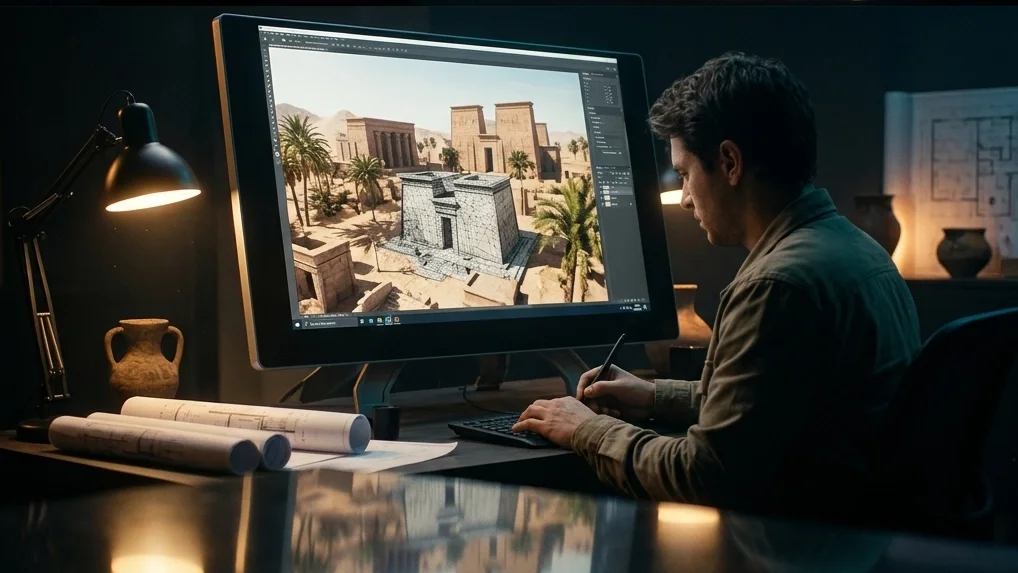
Behind the heavy doors of a darkened studio, the soft hum of my workstation sets the rhythm. Here, the glow of monitors serves as my modern canvas, where ancient history rises from the dust, pixel by pixel. For generations, the grand tales of the scriptures struggled on screen, hemmed in by tight budgets, stiff physical stages, and soft, cartoonish drawings that stripped away the raw majesty of the ancient world. I set out years ago with a simple, daring spark: to build a bridge spanning old ink and modern digital canvases. Armed with real-time 3D engines, specifically Unreal Engine, I sought to establish a visual standard that treats these ancient texts with the artistic honor and sheer scale they demand.
Seeking the Untamed Wild of the First Sanctuary
Rebuilding lost centuries demands an obsession with historical truth, towering scale, and thick, heavy atmosphere. I learned early on that traditional cameras and physical backdrops could never easily mirror the wild, untouched expanses of early Genesis, or the colossal, weathered stone walls of ancient empires. Through digital world-sculpting, I unlocked a boundless freedom to carve valleys, control the path of light, and shape surroundings that feel heavy, ancient, and worn by the hands of time. This is the story of how I mold these rich, virtual spaces and eventually bring those digital canvases into the physical world as premium, ready-to-hang art for modern homes.
Chasing the Pristine Wilderness of Eden
My first true creative challenge lay in painting the Garden of Eden. I wanted to steer far away from the manicured, orderly parks often found in classic religious paintings. The goal was an untamed, sacred wild. Genesis speaks of a rich, fertile land fed by a massive river system that branched into four great waterways. To breathe life into this description, I leaned heavily on Nanite, the virtualized geometry system within Unreal Engine 5.
Nanite allowed me to place millions of highly detailed, lifelike ferns, ancient stones, and towering cedars without slowing my computer to a crawl. I spent months hand-painting thick moss and ancient bark across a sprawling terrain that stretched for miles. I wanted the viewer to feel the damp, heavy air and smell the rich soil. This level of care defines our visual style, shaping the unique core of our cinematic bible aesthetics. We shaped the meeting of the ancient rivers using complex fluid simulations, creating water currents and rising mist. The resulting space felt raw, sacred, and untouched, a glimpse of a world before the fall.
Carving with Shadow and Flame
Light is far more than a way to make things visible; it's a silent narrator that speaks of divinity and fear. When I began planning the encounter of Moses and the burning bush, I knew the lighting had to carry the entire weight of that holy moment. Historically, film sets relied on flat studio lamps and simple orange filters to mimic fire. I wanted to capture the cold, isolated fear of Mount Horeb at twilight.
I turned to Lumen, the dynamic global illumination and reflections system in Unreal Engine 5, to trace how the glow of a self-sustaining, unconsuming fire would bounce off the jagged, dry rock faces of the mountain. I placed the bush on a elevated plain, wrapping Moses in cold, heavy shadows. The burning bush stood as the single, blinding source of warmth, throwing long, dancing shadows across the ancient desert floor. By adjusting the digital fog and floating dust, I let the light rays cut visibly through the night air. This harsh clash between the icy wilderness and the fiery glow created a sense of grand scale and intense intimacy, showing how digital spaces can stir deep human emotion.
Weaving Texture into the Halls of Power
To map the journey of the Wise Men as they entered the courts of King Herod, I turned the focus from wild nature to imposing, heavy stone architecture. I approached this chapter like a tense political thriller. I saw the Magi as ancient astronomers stepping into a cold, dangerous political web. The physical design of Herod’s palace had to scream wealth, massive ambition, and deep paranoia.
I refused to use clean, flawless digital blocks. Instead, I used textures that mirrored the gritty reality of the ancient Near East. I sourced limestone patterns scarred with chisel marks, layered with ancient dust, and weathered by dry winds to make the colossal pillars feel real. I filled the inner courts with thick, heavy rugs, bronze oil lamps, and complex stone floor tiles. The massive stone walls swallowed the light, leaving the corners in deep shadow, a visual echo of the king’s dark thoughts. This obsessive focus on touch and texture elevates our digital sets into rich, cinematic stories.
Bringing the Ancient Canvas into the Modern Home
As our library of digital scenes grew, I began hearing a common thread from those who watched our work. People were moved by the dramatic beauty of these virtual worlds and wanted a way to hold onto them beyond a glowing screen. This sparked our move into physical art, connecting digital craft with physical home spaces. Each framed canvas in our collection is a high-resolution print pulled straight from our 3D scenes, allowing people to bring a piece of this visual journey into their homes.
I bring the same obsessive care to our physical prints that I do to our digital pipelines. To ensure the deep shadows, rich textures, and dramatic light of our scenes survive the printing process, we use museum-grade, archival materials. We print on thick, textured cotton canvas using inks that resist fading over the decades. Each canvas is then hand-mounted and set into a simple, clean frame of solid oak or stained wood. This modern framing style lets the epic scale and weight of the image speak for itself, creating a quiet, powerful focal point that fits beautifully into modern homes.
The Ongoing Quest to Rebuild the Past
Recreating ancient worlds is an endless path of artistic discovery and technical growth. By treating these old stories with the care of a historian and the eye of an artist, we build experiences that speak to a modern, design-conscious audience. We step past the limits of old media, using modern rendering tools to build spaces that feel both visually striking and historically true.
Whether we are shaping the plagues of Egypt with heavy, dark storm clouds, or crafting a quiet, simple view of the valley of Psalm 23, our focus remains on high quality and deep storytelling. By merging modern 3D technology with physical craftsmanship, we offer a new way to sit with these ancient texts, turning both digital screens and physical walls into windows looking back in time.
Lessons in Crafting Ancient Visuals
Celebrate Imperfections: When building digital spaces, run from clean lines and repeating patterns. Introduce dust, chisel marks, and natural wear to make the ancient world feel heavy and real.
Control the Shadows: Use dynamic lighting to create high-contrast scenes. Fog and deep shadows help direct the eye, setting a sacred mood and a sense of vast scale.
Honor Historical Scale: Study ancient buildings, archaeology and geography to construct spaces that mirror the true physical weight of the stories.
Connect Digital and Physical: Digital art can live beautifully on physical walls. Use archival inks, heavy cotton canvas, and simple wood frames to let the artwork speak clearly.
