
HOW TO SELECT AND USE ACCURATE BIBLE STUDY VISUAL AIDS
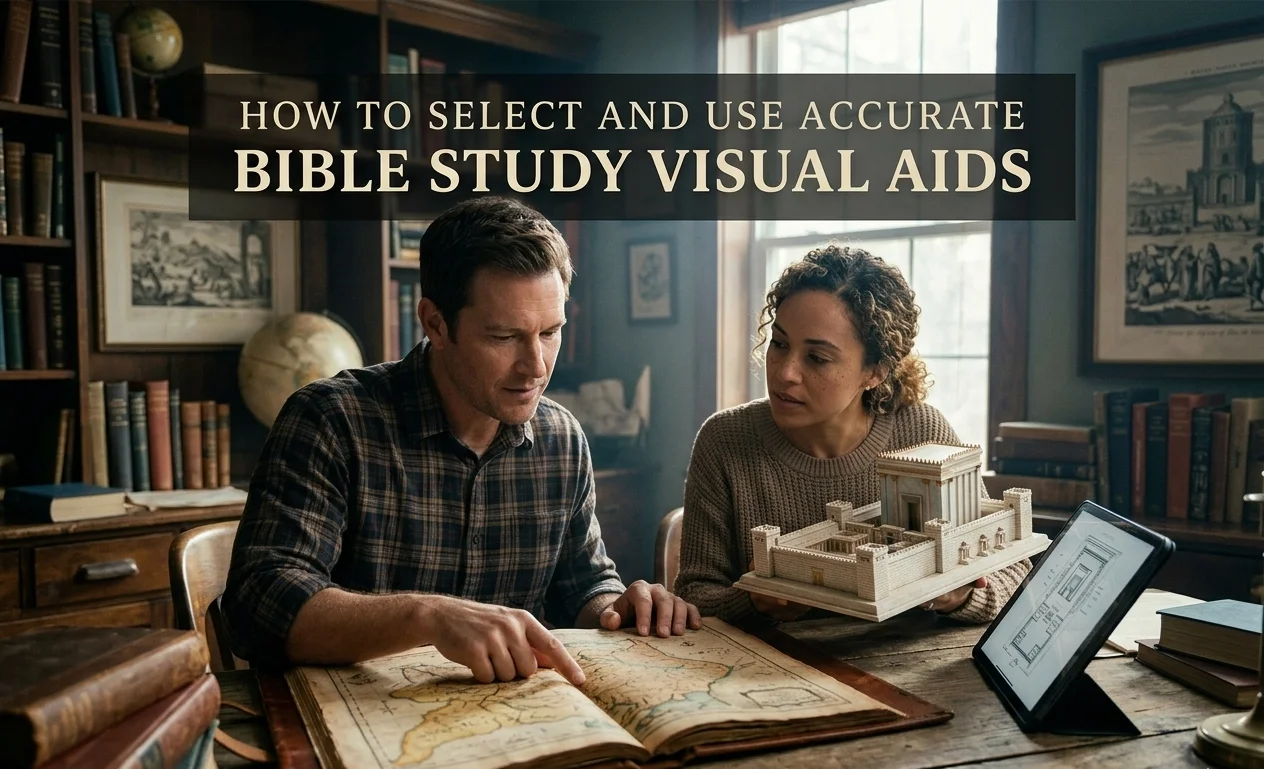
Two people studying The Bible with visual aides
Bringing physical and digital tools into a classroom changes how people remember history. Cognitive psychology points to dual-coding theory, showing that pairing spoken words with images significantly boosts memory retention and recall over mere listening. In classes, using bible study visual aids grounds ancient stories into concrete, observable realities. Accuracy in these graphics keeps teachers from spreading historical errors that damage the credibility of the text. Standard Sunday sermons often rely on sermon illustration media clips, but smaller group settings demand a closer, more hands-on look at details. This guide details how to find, build, and use realistic, true-to-life images and objects to deepen historical context and theological clarity.
The Historical and Archaeological Foundations of Accurate Media
When picking bible study visual aids, real history must override creative freedom. Centuries of Western art have skewed biblical scenes, putting ancient Near Eastern figures in Renaissance clothing or framing them against Italian villa backdrops. These mismatches warp the geography and culture of the ancient world. True design requires sticking closely to peer-reviewed archaeology and agreed-upon scholarship.
Digs in the dirt yield the actual blueprints for making true-to-life bible study visual aids. Consider the first-century Galilee Boat found in 1986. It gave historians exact measurements, build methods, and wood types from the era of Jesus. Any model of this boat needs to show its cobbled-together build of twelve distinct woods, its flat bottom, and its room for fifteen people. Painting this vessel as a sleek, varnished modern rowboat lies to the student about how poor Galilean fishermen actually lived.
Rebuilding the Herodian Temple Mount on screen requires relying on real-time archaeological data, not medieval paintings. Accurate pictures must display the gigantic ashlar blocks, the grand Royal Stoa, and the exact courtyard layouts recorded by Flavius Josephus and backed by modern digs. Using ancient measurements, like standard and royal cubits, keeps the proportions honest. This extreme care blocks old legends from spreading and earns the trust of students who care about historical truth.
Daily objects demand equal scrutiny, from pottery finishes to textile dyes and armor. Late Bronze Age clay vessels featured surface slips and handles worlds apart from Roman terra sigillata. Showing Roman soldiers at the cross in classical Attic helmets or late imperial armor instead of the coolus or imperial-gallic gear worn in Judea under Tiberius is a lazy mistake. True historical faithfulness honors the real world of the incarnation by presenting the biblical world exactly as it was.
Classifying and Selecting Effective Bible Study Visual Aids
People learn better when they can touch physical bible study visual aids that mirror daily life in the ancient Near East. Tangible objects or solid replicas let students use more than just their eyes and ears. Holding a clay replica of a first-century oil lamp offers an instant glimpse into ancient households, the dark of night, and the raw meaning of metaphors about light and oil. Feeling the weight and texture of a replica coin, like a silver denarius or a copper prutah, sheds immediate light on Roman taxes and local poverty.
Interactive maps act as great bible study visual aids to trace complicated migrations, troop movements, and changing borders. While old paper maps remain flat and fixed, digital cartography layers ancient hills, trade highways, and elevation changes. This helps when tracking the Exodus or Paul's travels, where the rugged land dictated paths and travel speeds. Showing the sharp drop of over three thousand feet from Jerusalem down to Jericho makes sense of the dangerous journey in the parable of the Good Samaritan.
Three-dimensional digital models provide a vivid window into ancient cities and temples. Programs like SketchUp and Unreal Engine help creators rebuild Babylon, Ephesus, or Jerusalem with immense detail. Teachers can lead virtual tours, pointing out how close structures stood to one another. Seeing how close the Antonia Fortress sat to the Temple Court of the Gentiles explains the lightning-fast response of the Roman guard during the riot in Acts.
Integrating Visual Media Into Curriculum Design
Weaving bible study visual aids into weekly lessons takes deliberate planning, not random guessing. Teachers should pair particular bible study visual aids with the theological focus of the week to ensure ideas sink in. When exploring Abraham's covenant, showing a timeline of early Mesopotamian city-states sets the stage. This structured habit keeps props from looking like cheap tricks, making them core parts of the lesson.
Using hands-on bible study visual aids keeps adults alert during longer sessions. Instead of showing a finished map, teachers can hand out blank contour maps for students to trace the paths of historical figures. This hands-on work builds spatial memory and sparks group talk. Students must talk to find the best routes around dry deserts and mountain passes, forcing them to look closer at the scripture.
To make this a regular habit, churches can use a simple three-step lesson plan. First, find the core historical moment or ancient custom in the scripture. Second, pick a visual aid that fits that backdrop, making sure historians back up its accuracy. Third, write down clear, fact-based talking points linking the visual to the biblical lesson. This simple routine ensures every prop has a real job to do.
Technical Tools and Resources for Visual Creation
A few public sites offer free, sharp images for making custom bible study visual aids. Museum databases, like those of the British Museum, the Metropolitan Museum of Art, and the Israel Antiquities Authority, share thousands of clear photos of verified relics. Teachers can download these public-domain images of coins, swords, bowls, and stone carvings to slide into their lessons or print out.
Creating your own bible study visual aids lets you match the graphics to your specific talking points. Graphic software like Canva or Adobe Express makes it easy to place modern text, labels, or scale bars over ancient pictures. When showing the Cyrus Cylinder, a teacher can place a translation of the cuneiform text right over the clay barrel. This trick connects dry archaeological finds directly to the lesson on the page.
Church boards should set aside funds for buying solid, physical bible study visual aids. While digital pictures cost nothing, good replicas of ancient finds require real money. Putting money aside each year to buy items like replica seals, clay tablets, and ancient farming tools pays off over time. This collection gives teachers of all ages real, tactile tools to elevate their weekly classes.
Think carefully when picking video clips. Instead of using flashy movie scenes that twist the text for drama, teachers should hunt for documentary footage showing real ruins and geography. Brief drone shots of the Judean Wilderness or the remains of Capernaum offer a raw, honest look at the terrain, helping students anchor the stories in real land.
Evaluating Visual Accuracy and Avoiding Common Pitfalls
Checking the truth of visual materials takes careful digging and trusted scholarship. Plenty of commercial Bible maps copy mistakes from old, outdated books. Frequent blunders include placing Mount Sinai in the wrong spot, drawing bad borders for Edom and Moab, and mislabeling ancient towns. Teachers must check their maps against modern scholarly atlases, like the ESV Bible Atlas or the Sacred Bridge, to verify borders and trade paths.
Another trap is using silly or cartoonish drawings for adult classes. Simple cartoons work for kids, but adults need realistic, detailed pictures that respect their intelligence. Using childish art can make serious biblical history look like a fairy tale. Choosing clean photos, true architectural sketches, and real historical relics keeps the tone respectful and scholarly.
Lastly, keep your visuals clean. A slide or paper packed with too many labels, lines, and crowded pictures fails to teach. The human mind can only track a few things at once, a reality known as cognitive load theory. To keep from overwhelming people, each visual aid should do one simple job. If a map shows Joshua's northern battles, leave out later borders from the divided kingdom to keep things simple.
Conclusion
Buying realistic, true-to-life bible study visual aids raises the bar for any class. By grounding pictures in proven archeology and geography, teachers build a bridge of trust with their students. Moving away from generic drawings to true models and physical replicas turns abstract theology into a living, historical reality.
In the end, using these bible study visual aids consistently connects the ancient world to modern minds. This steady practice ensures the historical backdrop of scripture remains true, helping the spiritual message shine with total clarity. Leaders who value historical accuracy help their groups read the bible with fresh confidence and deeper understanding.
| VISUAL AIDE TYPE | TACTILE ENGAGEMENT | HISTORICAL ACCURACY LEVEL | IMPLEMENTATION COST | PRIMARY USE CASE |
|---|---|---|---|---|
| Physical Artifact Replicas | High | Very High (Based on digs) | Moderate to High | Sensory engagement with material culture |
| Dynamic Digital Maps | Low | High (Requires scholarly atlases) | Low (Open-source available) | Geographical and military campaign tracking |
| 3D Digital Reconstructions | Medium | High (Based on architectural data) | Low to Moderate | Spatial understanding of ancient cities |
| Documentary Video Clips | Low | Very High (Real-world geography) | Low | Environmental and topographical context |
