
BALANCING HISTORICAL ACCURACY AND CREATIVE LIBERTY IN BIBLICAL FILMS
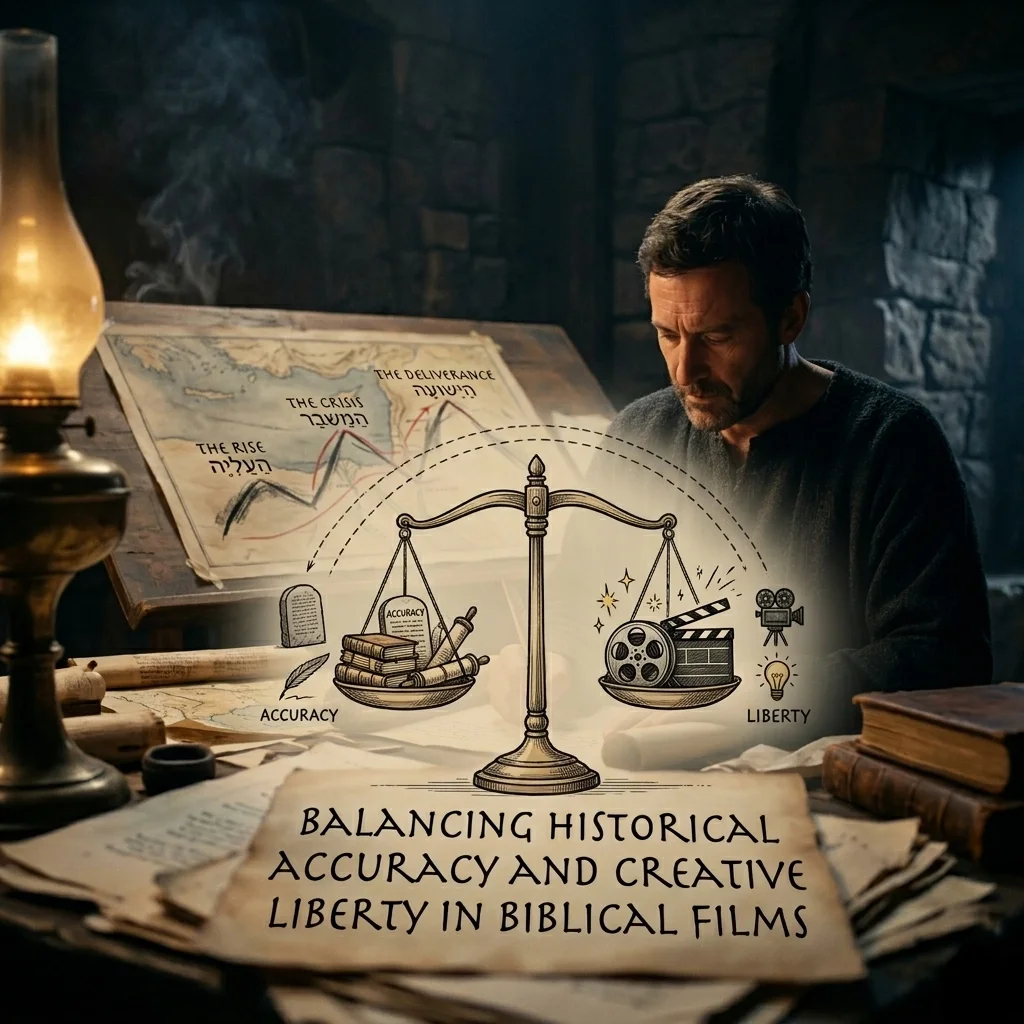
biblical writer writing a script for a biblical movie
The High Wire Act of Historical Accuracy in Biblical Films
My own search started with the physical debris of the past, the everyday items that anchor a scene in a specific time. To reach true historical accuracy in biblical films, designers have to discard simplistic nursery-school drawings. They must study the coarse weave of early textiles, the mineral makeup of Roman mortar, and the crude iron tools used to till ancient soil.
Material Culture and Archaeology
During the golden age of Hollywood, Cecil B. DeMille poured millions into his 1956 giant, The Ten Commandments. Yet, despite extensive research, the screen was filled with 1950s eyeliner and stage-style acting. The result was a polished, theatrical antiquity. It felt grand, yes, but it lacked the raw, dirty reality that modern viewers expect.
Linguistic Authenticity in Scriptural Cinema
Decades later, Mel Gibson chose a much harsher path for his 2004 release, The Passion of the Christ. He brought in Father William Fulco, a linguist, to reconstruct ancient Aramaic and Latin. Actors had to speak dead tongues. This dedication to linguistic detail anchored the drama in a cold, specific era, making the ancient world feel immediate, visceral, and frighteningly close. Audiences willingly stared at subtitles because the sights and sounds felt raw and honest. Still, even this film made concessions. It relied on late Western medieval art to shape scenes like the stations of the cross, details missing from the oldest records.
The Role of Topography and Environment
The search for truth must also look to the land itself. Finding locations that capture the harsh light and rocky terrain of the Middle East is vital. Directors often flee to the rugged hills of southern Italy, Morocco, or Jordan to mimic ancient Judea. There, the sharp clash of black shadows and bright, sun-bleached stone offers a natural visual metaphor for inner spiritual torment. This raw environment helps actors lose themselves in their roles, lifting the emotional truth of every scene.
When Creative License Collides with Historical Accuracy in Biblical Films
Sometimes the scriptures are notoriously quiet, offering bare outlines of events while leaving huge gaps in personal motivation and daily life. This silence forces writers to use their imagination to build a cohesive, two-hour story.
Filling the Gaps of Narrative Silence
When Darren Aronofsky tackled the 2014 film Noah, he dug into forgotten apocryphal texts like the Book of Enoch to flesh out the pre-flood world. He added towering rock giants called the Watchers and showed Noah as a tormented guardian of the earth driven nearly mad by his quiet, heavy burden. This daring creative leap triggered fierce debates among believers who expected a simpler, more familiar version of the patriarch.
The Risk of Challenging Familiar Visuals
This anger reveals the danger of straying from familiar paths. For many, a movie scene becomes the permanent picture in their mind. When a director challenges these sacred mental images, viewers feel their very faith is under attack. Ridley Scott ran into this wall with his 2014 film Exodus: Gods and Kings. He tried to explain the plagues of Egypt through nature rather than direct divine action. By showing the Nile turning red because of a feeding frenzy of crocodiles, Scott tried to anchor the miracles in science. Instead, he angered viewers who felt he stripped away the divine mystery.
Survival in this genre depends on intent. When a filmmaker uses license to explore a character's inner torment or the messy politics of the era, the story grows richer. But when these changes clash with the core spiritual message of the text, they build a wall. The audience shuts down.
Navigating Theological Truth and Historical Accuracy in Biblical Films
A director can get every sandal strap and pottery shard right while completely missing the soul of the story. On the other hand, a film can rewrite history books yet capture the spiritual heart of the text. Recognizing this difference is vital for anyone hoping to create something lasting.
Theological Truth vs. Literal Chronology
Look at the 1998 animated film The Prince of Egypt. The writers changed the bond between Moses and Rameses, turning them into adoptive brothers who loved each other. History and scripture do not support this. Yet, it injected a heartbreaking personal tragedy into the escape from Egypt. It showed the heavy cost of Moses's calling and the painful pride of Pharaoh.
By focusing on this emotional core, the creators captured the true spirit of the story, reaching a depth that moved people of all faiths. They captured freedom, belief, and divine power without getting tangled in literal timelines. It proves that spiritual truth lives in the deep currents of a story, not in the dry branches of a family tree.
Fictionalized Backstory in Modern Episodic Formats
In recent years, episodic shows like Dallas Jenkins's The Chosen have changed the game by embracing invented backstories. The creators use deep historical research to paint believable daily routines, social pressures, and personal heartaches for the followers of Jesus. They gave Peter a crushing tax debt and portrayed Matthew as neurodivergent. These creative leaps make ancient figures feel like real neighbors. It respects the core faith of the gospels while using drama to spark deep empathy.
Balancing Historical Accuracy in Biblical Films with Dramatic Pacing
Blending strict historical accuracy in biblical films with the fast pace of modern cinema is hard. It requires a clear, thoughtful plan. The work begins long before the cameras roll, lasting through casting, set building, and editing. I found a few simple rules that help creators balance these demands.
Key Strategies for Filmmakers
Form an Advisory Council: Directors should assemble a diverse group of historians, archaeologists, and scholars. This group must not act as censors. Instead, they should be a well of ideas. By learning the realities of the ancient world, writers can find rich, real conflicts they would have never dreamed up on their own.
Value Human Connection: Put emotional truth above literal facts. If a minor historical detail stops a viewer from feeling a character's pain, change it. The goal is a living, breathing world, not a cold museum display.
Be Entirely Open: Directors should share their creative choices openly. Sharing research, behind-the-scenes footage, and director notes helps the audience understand the thought process behind any changes to the text.
The Lasting Legacy of Historical Accuracy in Biblical Films
The lasting pull of these stories is that they force us to face the hardest questions of our own lives through the lens of faith. When a film balances historical detail with good storytelling, it does more than entertain. It drags us into a world both strange and familiar. It challenges our beliefs and stretches our empathy. In the end, a great film is not judged by a checklist of ancient facts. It is judged by how well it makes the ancient search for meaning feel alive today.
By honoring the gritty reality of the past while embracing the power of story, filmmakers can create art that lives on. These films become lasting landmarks, fueling deep conversations about faith and humanity long after the theater lights turn back on.
