
DEVELOPING COMPELLING CHARACTERS IN CINEMATIC BIBLICAL STORIES
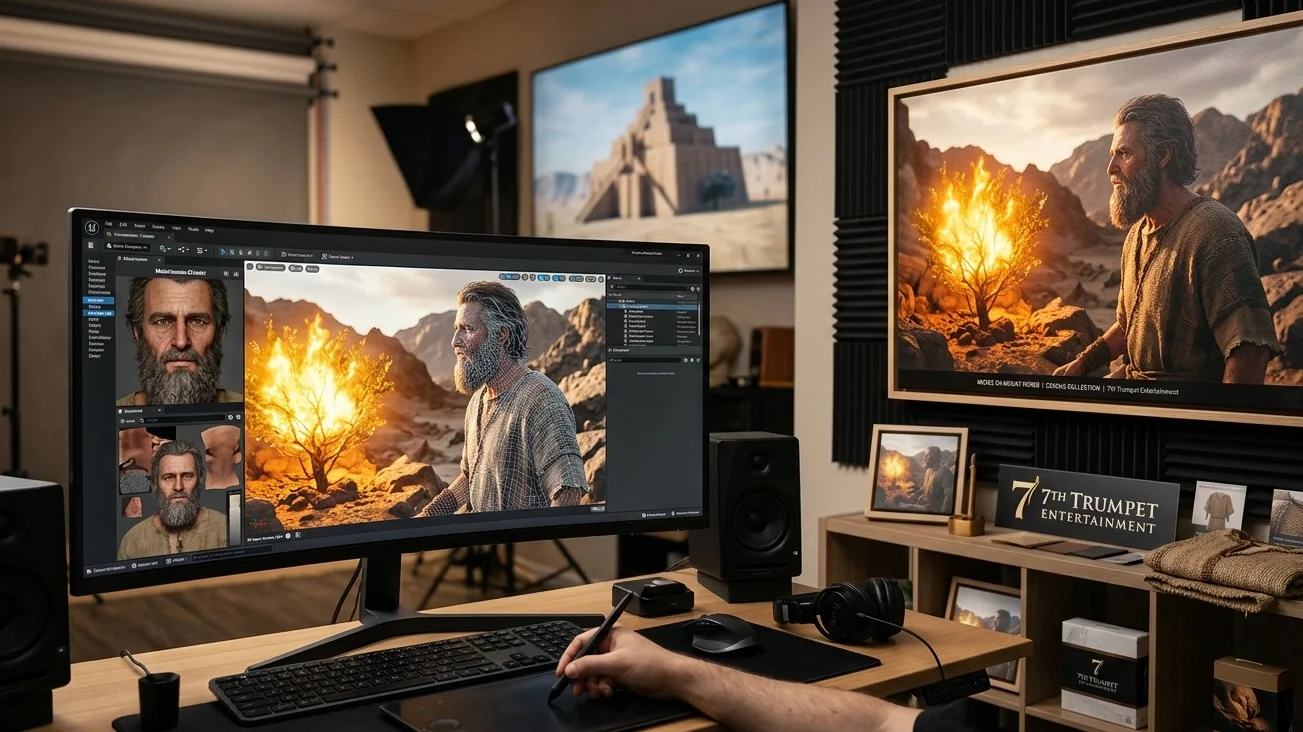
Creating a Biblical 3D character in Unreal Engine 5
Forming Clay and Light: Biblical Character Development in Cinematic 3D Art
As the dying sun dipped below the virtual horizon, casting deep amber shadows across the digital dust of our ancient Persian courtyard, I felt a quiet truth. Visual storytelling lives in the eyes of those who inhabit the frame. When I created 7th Trumpet, I knew that conquering biblical character development meant more than simple rendering. It was our bridge. I had to connect biblical stories with the hyper-detailed landscapes of modern digital screens. Translating bible stories into cinematic character arcs takes more than a skilled hand on a digital stylus. It requires a quiet, almost fearful descent into human weakness, historical truth, and heavy theology. This is the story of how I write biblical figures, carving out digital models that breathe the dust of scripture while staying fiercely loyal to the Bible’s words.
The Human Soul Behind the Sacred Outline
Most films and screens turn these old narratives into cardboard cutouts. They paint complex scripture figures with a broad, lazy brush, showing either flawless saints or absolute monsters. I chose a different path. Our work began with Moses standing before the Burning Bush. He was a prince, a fugitive, a keeper of sheep, and a man terrified of his own calling. As I shaped his 3D model, I let his inner torment carve his outer flesh. I cut deep, dry gullies into his cheeks, the physical toll of forty years hiding in the Midian waste. His tunic had to be rough, woven from coarse, dirty wool, showing a plain shepherd before the fire of the heavens consumed his vision. This microscopic focus lets viewers live through his cinematic character arcs as raw, desperate human steps, not cold history lessons. When biblical character development becomes the anchor, people feel the ancient fears and triumphs as if they were their own.
Behind the Pixels: Unreal Engine 5 Workflows
Rendering human emotion into raw data requires a clever mix of art and code. I build our figures using Unreal Engine 5 and Character Creator 5, giving them lifelike bodies and the tiniest, most expressive movements. I spent hours tweaking skin shaders to mimic the blistering, dry heat of the ancient Levant. I threw out clean, machine-made assets. Instead, I created customized layers of grit, sweat, and sun-scarred textures onto the skin. When I forged our Exodus project, I gave Pharaoh sharp, perfectly symmetrical angles, placing his immaculate, cold look against the rough, beaten-down skin of Moses. This clash of textures was no accident. It was a visual sermon on pride facing divine power. By adjusting how light scatters beneath the virtual skin in Unreal Engine 5, I captured the glow of real flesh. Every small jaw twitch or welling tear carries heavy weight, pulling the viewer straight into the heat of the moment..
Carving out the Shadows of History
Creating these scripts demands both deep historical digging and raw instinct. When I began our film about King Herod and the long march of the Wise Men, I had to peel back centuries of folklore to find the real people underneath. I refused to make the Magi look like three generic, robed men holding shiny jewelry boxes. I studied ancient Persian stargazers, draping them in heavy, midnight-blue silk stitched with celestial maps to show their status as brilliant academics. I filmed their march across the endless, wind-battered dunes in wide shots, showing how small they were against the vast sky. Inside the palace, I surrounded Herod with cold, dark basalt and sharp, jarring light. The architecture itself screamed of his paranoia, throwing long, dark bands across his face to reveal his fragile grip on the throne. By weaving these settings directly into our cinematic character arcs, I built a silent dialogue that tells the viewer everything without a single line of speech. The vast, star-lit desert of the seekers stands against the cramped, smoky rooms of the tyrant, writing a story of those who seek truth versus those who cling to power.
Why These Ancient Figures Command the Screen
People in scripture carry built-in drama because they stand with one foot in the dirt and the other in the divine. This tension is a goldmine for storytelling. When I built our Eden project, I wanted to show the terrible slide from perfection into ruin. Before the fall, our characters had an almost glowing, clear quality. I used thick, dusty shafts of light to show their innocence. After the forbidden fruit was taken, I changed everything, casting long, cold shadows and shifting to a pale, freezing color palette to show their sudden shame. This visual swing shows how cinematic character arcs can explain deep spiritual truths without words. The audience does not merely watch. They feel the heavy weight of the fall through the changing light on the characters' skin. This complete absorption separates true art from cheap, fast-rendered cartoons. It takes a real dedication to the script, honoring both the viewer and the holy text.
From the Screen to Your Living Room Wall
The feeling left by deep biblical character development should not fade when the display turns black. At 7th Trumpet Entertainment, our films form the direct base for our physical collection. When I freeze a stunning, high-fidelity scene, like Moses staring at the blazing peak or the quiet peace of untouched Eden, I turn that frame into a physical masterpiece. I transfer these scenes onto museum-grade, long-lasting canvas, setting them in wood frames that look beautiful in any home. This link lets families hang a piece of the story on their walls, a quiet, beautiful reminder of God’s truths. Unlike cheap, blurry prints, these canvases hold the weight of hard historical study and artistic passion. Every stroke of virtual paint and every hand-drawn background stays perfectly clear, bringing a premium feel to your room. Walk through our framed scripture wall art collection to discover a piece that speaks to your home.
The Foundations of Our Creative Process
Creating figures that speak across thousands of years takes a deliberate method. By dividing our work into clear pillars, I make sure each design honors the Bible while matching the beauty of high-end digital art.
Deep Historical Roots: I study ancient weaves, regional faces, and old politics to plant our characters firmly in their actual times.
Shifting and Moody Light: I employ high-contrast shadows to show inner battles, using light to signal spiritual discoveries or deep doubt.
Textured History: I use detailed maps and custom shaders to paint age, sweat, and wind on skin and robes.
Spiritual Truth: I keep the raw struggles and holy meetings found in the text, refusing to water them down into simple lessons.
Looking Forward: The Paths Yet Unseen
Weaving true, believable lives into these old stories demands a careful marriage of faith, history, and modern technology. By keeping our eyes on the raw, sweating humanity of these people and using tools like Unreal Engine 5, I can build worlds that pull viewers in. Our path has taught me to prize emotional truth over easy, generic tropes, to use light and texture to show inner wars, and to tie each person to their setting. In the end, this slow, painstaking care allows us to connect biblical stories with today's screens. I offer both striking films and beautiful, museum-grade art that honors the lasting weight of the holy word.
